Verrucas in Children: Causes, Symptoms, and Treatments
Verrucas, also known as plantar warts, are a common foot complaint in children across the UK. These stubborn little growths can cause discomfort and worry for parents, but they’re usually harmless and often clear up on their own. Caused by a virus, they’re especially prevalent in school-age kids who spend time in swimming pools, changing rooms, or playing barefoot.
This guide explains what verrucas are, why children get them, how to recognise the signs, and the range of treatment options available – from simple over-the-counter remedies to professional podiatrist care, including the newer microwave-based Swift therapy.
What Causes Verrucas?
Verrucas are triggered by the human papillomavirus (HPV), a highly contagious virus with many strains. Unlike the HPV strains linked to cervical cancer, the ones that cause verrucas are low-risk and only affect the skin.
The virus enters the skin through tiny cuts or scratches, often on the soles of the feet. Warm, moist environments like public swimming pools, communal showers, and sports changing rooms are prime spots for picking it up. Children are particularly susceptible because their immune systems are still developing, and they’re more likely to go barefoot or share towels and shoes.
Once the virus takes hold, it causes the skin cells to multiply rapidly, forming a thickened, hardened area. Verrucas can spread to other parts of the same foot, to the other foot, or even to other family members through direct contact or shared surfaces.
Symptoms to Look Out For
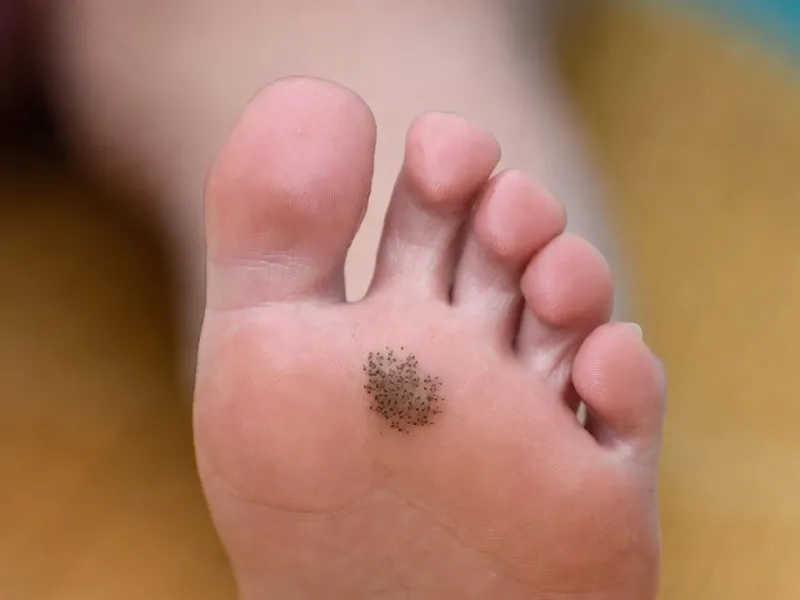
Verrucas typically appear as small, rough, circular growths on the soles of the feet or around the toes. They may look flattened because of the pressure from walking. A classic sign is tiny black dots in the centre – these are actually dried-up blood vessels, not “roots” as some people think.
The main complaint from children is pain. Many describe it as feeling like a pebble in their shoe or standing on a needle, especially when the verruca is on a weight-bearing area like the heel or ball of the foot. Some children limp or avoid certain activities. Larger or multiple verrucas (known as mosaic verrucas) can be more uncomfortable.
If your child has a sore spot on their foot that doesn’t improve, check for these signs. It’s easy to mistake a verruca for a corn or callus, so if you’re unsure, a pharmacist or podiatrist can help confirm.
Do Verrucas Always Need Treatment?
Here’s the reassuring part: most verrucas resolve without any intervention. In children, about half disappear within six to twelve months, and up to 90% clear within two to five years as the immune system learns to fight the virus. The NHS often advises a “watch and wait” approach for painless verrucas, especially in younger children, because treatments can sometimes be uncomfortable and don’t guarantee success.
However, treatment is worth considering if the verruca is painful, spreading, affecting your child’s walking or sports, or causing embarrassment.
Over-the-Counter Treatments
For many families, the first step is pharmacy-bought remedies. These are widely available and affordable.
The most common and evidence-backed option is salicylic acid, found in products like Bazuka, Salatac, Duofilm, or Scholl Verruca Removal Gel. It works by gradually peeling away the infected skin layers. You apply it daily after soaking the foot, filing down dead skin with a pumice or emery board (use a separate one to avoid spreading), and covering with a plaster. Treatment can take weeks to months, and persistence is key – success rates are around 50-70% when used correctly.
Freezing sprays such as Scholl Freeze Verruca Spray or Dr Scholl’s Freeze Away use dimethyl ether to freeze the verruca at home. They’re quick but can sting and may need repeating every few weeks.
Some parents try duct tape occlusion – covering the verruca tightly for six days, then soaking and filing – though evidence is mixed. Always follow instructions carefully, protect surrounding healthy skin, and stop if it becomes sore.
Seeing a Podiatrist: Professional Treatments
If home treatments don’t work after a few months, or the verruca is particularly stubborn or painful, a podiatrist (chiropodist) is the next step. The NHS may offer limited podiatry for persistent cases via GP referral, but many families opt for private care for faster access.
Podiatrists can use stronger versions of the above treatments:
- Professional cryotherapy with liquid nitrogen is more powerful than home freezing kits and often repeated every 2-4 weeks.
- Stronger acids or caustic agents like silver nitrate.
- Verruca needling – a minor procedure under local anaesthetic where the verruca is punctured to stimulate an immune response. It’s effective for single, deep verrucas and often needs only one session.
- In rare cases, surgical excision or laser treatment.
A newer, innovative option gaining popularity in the UK is Swift microwave therapy. Developed here in Britain, Swift delivers precise bursts of microwave energy directly into the verruca using a handheld probe. It heats the infected tissue, triggering the body’s immune system to attack the virus without breaking the skin surface. Treatment takes just a few seconds per zap, with most children needing 3-4 sessions spaced a month apart. Pain is brief (described as a short hot pinch), and there’s no need for dressings afterwards.
Studies and clinic reports show clearance rates of 74-82% after three to four sessions, and it’s safe for children. Many private podiatry clinics now offer Swift, typically costing £150-200 per session, though some offer child discounts or packages.
Prevention Tips
While you can’t always avoid verrucas, simple habits help:
- Wear flip-flops or verruca socks in public pools and changing rooms.
- Dry feet thoroughly after swimming.
- Don’t share towels, socks, or shoes.
- Cover existing verrucas with a waterproof plaster when swimming.
- Encourage children not to pick or scratch them.
Verrucas can be frustrating, but they’re a normal part of childhood for many UK kids. Patience often pays off, but effective treatments exist when needed. Start with over-the-counter options, and if those fail, consult a podiatrist – especially for advanced therapies like Swift that offer quicker resolution with minimal fuss.
Always chat to your GP or pharmacist first if your child has diabetes, poor circulation, or a weakened immune system, as verrucas may need different management.
With the right approach, your child will soon be back running around pain-free.